
Best Hotels In Barcelona
Updated: Mar 26
The Best 5 Star Hotels In Barcelona: Our Review

Article summary>>
In this article
Top 10 Best Hotels in Barcelona
Best 5-Star Hotels Barcelona
Booking
Tours & activities in Barcelona
#1 Mandarin Oriental Barcelona:
The Mandarin Oriental, Barcelona, is the kind of hotel that makes you rethink what urban luxury means. Set directly on Passeig de Gràcia, the city’s grand boulevard of modernist façades and designer boutiques, the property manages a delicate balance: it is at once deeply tied to the fabric of Barcelona and an escape from it. Stepping through its discreet entryway, framed by a white steel bridge, feels like crossing a threshold into a softer, more curated version of the city.

The lobby is not ostentatious, but rather sculptural, with clean lines and cool marble tones, evoking more of an art gallery than a grand hotel. It’s the sort of space where every design element has been considered. Patricia Urquiola’s hand is everywhere, from the lattice screens to the way light is diffused, so guests are bathed in a glow that feels flattering and intentional. There’s a serenity here, a hush that contrasts with the hum of Passeig de Gràcia just outside.
Rooms continue this balance of restraint and indulgence. Minimalist in palette but generous in scale, they are sanctuaries of pale oak, crisp white linens, and smartly concealed technology. Some overlook the boulevard, offering a postcard of Gaudí’s Casa Batlló across the street, while others face the garden courtyard, where greenery creeps up walls and guests sip cava in the afternoons. The bathrooms, clad in marble with freestanding tubs, feel less like afterthoughts than destinations of their own, a private spa within the suite.

But the Mandarin Oriental is not content to cocoon. It insists on seducing the senses. The rooftop, Terrat, is among the most cinematic vantage points in Barcelona, its infinity-edge pool giving the illusion of floating above the Eixample grid, with the Sagrada Família rising improbably in the distance. Come sunset, the rooftop transforms into a gathering place where locals and guests alike linger over Peruvian-inspired tapas and cocktails tinged with pisco and lime.
The hotel’s culinary anchor, Moments, helmed by the celebrated Carme Ruscalleda and her son Raül Balam, is a lesson in Catalan fine dining, reinterpreted with precision and imagination. Dining here is not simply a meal; it’s a narrative told through courses that reference the sea, the countryside, and the traditions of the region, all refracted through a Michelin-starred lens.

Downstairs, the spa continues the Mandarin Oriental’s global reputation for wellness, but with a distinctly Mediterranean rhythm. Treatments lean into aromatics, orange blossom, rosemary, lavender, delivered in candlelit therapy rooms reached by a spiralling white staircase. There’s something almost monastic about descending into that subterranean cocoon, a counterpoint to Barcelona’s kinetic street life.

What makes this hotel remarkable is not just its luxury, but also the way it situates itself within the city. Unlike some international brands that could exist anywhere, the Mandarin Oriental, Barcelona, is unmistakably rooted in place. The service is warm without being ingratiating, polished yet personal, reflective of a Catalan pride that never tips into pretension.
To stay here is to experience Barcelona with a layer of refinement, a reminder that even in one of Europe’s most vibrant cities, there is room for stillness, grace, and moments of exquisite pause. Certainly one of the best hotels in Barcelona.

#2 Hotel Arts Barcelona:
Some hotels feel like they belong to a city, woven seamlessly into its skyline and mythology, and then there is the Hotel Arts Barcelona, which seems to define it. Rising like a glass-and-steel sentinel over the Mediterranean, this 44-story tower was one of the emblems of the 1992 Olympic transformation. Decades later, it still feels audacious: a soaring modernist statement, crowned by Frank Gehry’s monumental copper fish sculpture, El Peix, which glows at sunset like a living thing.

The approach alone sets the tone. Driving along the waterfront, with Barceloneta’s sandy sweep to one side and the Marina to the other, the hotel is impossible to miss. Step through the doors and the mood shifts instantly: inside, it’s a sanctuary of polished marble, oversized floral arrangements, and panoramic windows that frame sea and sky like shifting works of art. There’s a buzz here, international, glamorous, unapologetically cosmopolitan, that contrasts sharply with the gothic alleys and tapas bars just a short taxi ride away.
Rooms are where the drama softens. Floor-to-ceiling windows make the views the star, whether it’s the turquoise sprawl of the Mediterranean or the intricate geometry of the city’s Eixample grid. Interiors are refined but understated: clean-lined furnishings, soothing tones of beige and blue, crisp linens that practically glow against the Catalan light. Bathrooms, all marble and glass, are indulgent, with deep soaking tubs positioned so you can watch the horizon while you unwind.

But this is not a hotel that hides behind its windows. Hotel Arts is social, extroverted, a stage as much as a retreat. The pool deck, landscaped with palms and overlooking the sea, is one of the city’s great outdoor living rooms, a place where bronzed travellers and sleek Barcelonians gather with cocktails in hand. The infinity pool glimmers like a slice of the Mediterranean itself, while DJs spin unobtrusively as the day slips into evening.
The culinary offerings are a destination in their own right. Enoteca Paco Pérez, with its two Michelin stars, is a masterclass in contemporary Mediterranean gastronomy, sea urchin foam, perfect slivers of bluefin tuna, and dishes that distil the essence of the Costa Brava. Even breakfast feels elevated here, served against a backdrop of endless water.
Then there is the spa, 43 The Spa, to be exact, perched on the top floors, with treatment rooms that look directly onto the sea. Few wellness experiences feel quite so ethereal as a massage performed in near silence while ships drift lazily across the horizon below.

What keeps Hotel Arts from tipping into ostentation is the service. Yes, it’s polished to Ritz-Carlton standards, but it also carries a warmth, a genuine attentiveness that feels both international and distinctly Mediterranean. Staff anticipate without hovering, offering cava on arrival, recalling your preferred table by the pool, and suggesting a tucked-away vermuteria for the afternoon.
In a city as endlessly seductive as Barcelona, it's no small feat for a hotel to become a destination in itself. Yet Hotel Arts manages it with ease, a gleaming tower of glass and light that captures the spirit of the city: bold, creative, and always looking out to sea.

#3 Majestic Hotel & Spa Barcelona:
On Passeig de Gràcia, where Gaudí’s architectural fantasies rise like mirages and luxury boutiques gleam in the Mediterranean light, the Majestic Hotel & Spa has stood for more than a century as Barcelona’s grande dame. Opened in 1918, the building’s neoclassical façade still presides with the kind of quiet confidence only time bestows. This isn’t the brash newcomer or the design-forward experiment; it’s the hotel where heads of state, artists, and visiting royals have stayed, where Catalan history and hospitality converge in polished marble and chandeliers.

Walking into the lobby, I felt the particular charm of a place that has hosted generations yet never slipped into nostalgia. The grandeur is palpable, marble floors gleaming beneath gilded mouldings, staff in perfectly tailored uniforms offering greetings that feel both formal and warm. There’s a sense of theatre here, but it’s never intimidating; the Majestic welcomes you into its world with grace.
Rooms and suites reflect this dual identity: a reverence for tradition balanced with modern comfort. High ceilings, heavy drapery, and soft palettes of cream and gold create a timeless backdrop, while technology and contemporary touches are seamlessly integrated. My suite faced Passeig de Gràcia itself, offering a tableau of Barcelona’s life unfolding below, shoppers darting into Prada, tourists craning up at Casa Batlló, the occasional street musician lending a soundtrack. It was the perfect perch: elevated yet connected.

The rooftop terrace, La Dolce Vita, is where the Majestic feels most attuned to modern Barcelona. By day, it’s a sunlit sanctuary with a plunge pool overlooking the grid of the Eixample and the distant silhouette of the Sagrada Família. By evening, it transforms into one of the city’s most elegant cocktail lounges, the skyline glittering as the lights come up, DJs spinning discreetly while cava glasses clink. From this vantage point, the city feels both infinite and intimate, spread at your feet.
Dining here is equally a point of pride. The Majestic’s connection to Catalonia’s culinary scene is evident in its collaboration with chef Nandu Jubany, whose influence ensures that everything from the tasting menus to the breakfast buffet celebrates local produce and tradition. Mornings begin with fresh-baked ensaïmadas, Iberian ham carved to order, and the kind of coffee that sets the pace for a day of exploration.

Downstairs, the Majestic Spa offers a different sort of indulgence. Intimate and cocoon-like, it’s worlds away from the bustle outside, with treatments that lean into European wellness traditions. I found myself lulled into near silence after a hot-stone massage, emerging to the sight of Passeig de Gràcia alive again with afternoon shoppers.
What sets the Majestic apart is its legacy. This is not simply a luxury hotel; it is part of Barcelona’s story, a place where elegance has been preserved but not ossified. Service is impeccable yet personal, with staff remembering your name, your preferred table at breakfast, and even the way you take your espresso.
To stay at the Majestic is to engage with Barcelona on a grand scale: its history, its style, its rhythms, all distilled into one address. It is at once timeless and contemporary, a landmark that reminds you why Passeig de Gràcia remains the city’s most dazzling boulevard.
#4 El Palace Barcelona:
In a city defined by modernist whimsy and Mediterranean flair, the El Palace Hotel Barcelona stands as a grand counterpoint, a temple to timeless luxury where history hums softly in the marble halls. Opened in 1919 as the Ritz, it remains one of the city’s most iconic addresses, carrying with it a century’s worth of stories: aristocrats, artists, and even Ernest Hemingway, who was said to enjoy its bar as much as its beds.

The hotel’s neoclassical façade on Gran Via de les Corts Catalanes hints at the scale of what lies within, but it’s upon stepping into the lobby that one feels transported. Sweeping staircases, glittering chandeliers, and richly upholstered armchairs create the sense of a grand European salon, where the elegance is not performative but deeply ingrained. The air is perfumed faintly with lilies, the kind of detail that suggests a house proud of its traditions.
Guestrooms lean into this legacy. Decorated in Louis XVI style, they are all flourishes and finesse: velvet drapes, carved mouldings, gilt mirrors, and a palette of soft pastels that soothe after a day in the city. Yet they never feel frozen in time, the beds are cloud-soft, the bathrooms are marble-clad sanctuaries, and the service is so intuitive it feels almost familial. Drawing the curtains in the morning to reveal balconies overlooking the Eixample grid, I was struck by how the hotel seems to reconcile two Barcelonas: the cosmopolitan modern capital and the elegant European city of another era.

If the rooms embody history, the rooftop garden speaks to reinvention. A lush expanse of greenery five stories above the city, it’s one of Barcelona’s most magical escapes. Citrus trees, ivy-covered trellises, and fountains set the stage for evenings of cocktails and starlight, with Montjuïc and the Sagrada Família etched into the skyline. By day, the pool glitters invitingly; by night, the terrace becomes one of the city’s most romantic vantage points, alive with the glow of lanterns and soft music.
Dining at El Palace is equally steeped in both tradition and innovation. Amar Barcelona, overseen by Michelin-starred chef Rafa Zafra, is a tribute to the sea, oysters, caviar, and the freshest Mediterranean catch elevated into haute cuisine, all served beneath a ceiling of mirrored tiles that refract the light like the surface of water. Even the hotel’s afternoon tea, served in the grand hall with piano accompaniment, feels like a performance, a ritual that insists time be savoured rather than rushed.

The spa, inspired by the Mayan Riviera, is perhaps the hotel’s most unexpected secret. Descending into its subterranean sanctuary, guests find a world of carved stone, flickering candles, and treatments that draw on ancient rituals. The juxtaposition is striking: a Catalan palace above, a Mayan temple below.
What makes El Palace unforgettable, though, is not just its beauty or even its storied past, but its ability to feel personal. Service is stately yet warm, as if the staff themselves have inherited the hotel’s legacy of refinement. To stay here is to be reminded that luxury is not always about novelty; it is about continuity, about being part of a story larger than yourself.
In a city that celebrates the avant-garde, El Palace remains a sanctuary of classicism, offering a Barcelona experience as timeless as it is indulgent.

#5 Ohla Barcelona:
In a city where centuries-old cathedrals sit in unison with sleek design boutiques, the Ohla Hotel Barcelona feels perfectly at home, a property that embraces both history and modernity with confidence. Located on Via Laietana, the grand avenue that slices between the Gothic Quarter and El Born, the hotel occupies the former palace of the first Count of Barcelona. Today, its striking façade, dotted with whimsical ceramic “eyeballs” by artist Frederic Amat, makes it impossible to miss. It is as if the building itself is watching the life of the city unfold.

Stepping inside, the sense of playful elegance continues. The interiors are pared back and contemporary, all dark wood, clean lines, and artful lighting that lends a warm glow. It’s a deliberate contrast to the medieval streets just outside, a reminder that Barcelona is a city of reinvention. The lobby feels more like a stylish lounge than a grand entrance hall; it sets the stage for a hotel that is intimate in scale but ambitious in style.
Rooms at the Ohla are a study in modern minimalism. Neutral palettes, glass-walled bathrooms, and clever spatial design create an atmosphere of calm sophistication. Floor-to-ceiling windows open onto the pulse of the city, whether it’s the spires of the Gothic Quarter or the bustling rhythm of Via Laietana. The effect is cocoon-like, a retreat from the urban energy outside while still keeping you connected to it. Some suites feature private terraces with plunge pools, tiny sanctuaries for sipping cava while listening to the hum of the city below.

But the heart of the Ohla beats on the rooftop, where one of Barcelona’s most photogenic pools seems to stretch toward the skyline. Sleek loungers line the terrace, and the city spreads out in every direction: domes, bell towers, and rooftops tumbling toward the sea. It’s both a perch and a playground, where cocktails flow from the rooftop bar as the sun sets in shades of pink and gold. Few spots in the city feel so effortlessly glamorous.
Food, too, is central to the Ohla’s identity. Its signature restaurant, Caelis, helmed by chef Romain Fornell, holds a Michelin star and delivers haute cuisine that melds French precision with Catalan flavours. Think foie gras alongside locally sourced seafood, plates that are as beautiful as they are inventive. For something more relaxed, La Plassohla offers creative tapas in a lively brasserie setting, perfect before heading out into El Born’s nightlife.

The hotel’s location is a gift. Step out the front door and you are moments from the Cathedral, the winding alleys of the Gothic Quarter, and the boutiques and galleries of El Born. Yet inside, there’s an intimacy that shields you from the city’s frenetic pace.
What makes the Ohla special is its balance: bold design without pretension, Michelin-starred dining without stiffness, service that is polished but genuinely warm. It is a hotel that feels distinctly Barcelonian, rooted in history, daring in its creativity, and always looking outward.
To stay here is to experience Barcelona at its most dynamic: past and present layered seamlessly, with a rooftop pool waiting at the end of the day.

#6 Grand Hotel Central Barcelona:
On the edge of the Gothic Quarter, where medieval alleyways unravel into the grand sweep of Via Laietana, the Grand Hotel Central Barcelona occupies a privileged position. From here, you are at the crossroads of the city’s stories: the ancient stones of the Roman wall on one side, the boutiques and galleries of El Born on the other, and, just beyond, the glittering Mediterranean. Yet inside, the hotel is a sanctuary of modern design, a place where Barcelona’s past and present flow together seamlessly.

Housed in a 1920s building originally designed as a private mansion, the Grand Hotel Central carries with it a quiet sense of history. But step into the lobby, and you are met with sleek lines, warm woods, and ambient lighting that feels more cosmopolitan than nostalgic. The aesthetic is contemporary, but never sterile; it’s the kind of understated luxury that whispers rather than shouts, leaving space for the city itself to take centre stage.
Rooms are generous in scale by Barcelona standards, with tall windows that flood the spaces with Mediterranean light. Interiors are chic and unfussy, think polished oak floors, neutral textiles, and just a hint of Catalan flair in the artwork and detailing. My suite looked out over the Gothic Quarter, its rooftops and bell towers unfolding like a cinematic panorama. At night, the city glowed golden and hushed; in the morning, the bells marked the beginning of another lively day. Bathrooms are sleek, lined in stone and glass, with rainfall showers that feel like miniature spas.

The crown jewel of the Grand Hotel Central, however, is its rooftop infinity pool. Suspended above the city, it offers what might be the most spectacular view in Barcelona: the serrated outline of the Gothic Quarter in one direction, the sparkling Mediterranean in another, and, on the horizon, the towers of the Sagrada Família. Swimming here feels almost surreal, as though the city itself has become a backdrop. The rooftop bar, City Bar, ensures the experience continues after the sun dips, cocktails in hand, guests linger as the skyline shifts from blue to amber to indigo.
Dining is equally thoughtful. City Restaurant, the hotel’s main dining room, emphasises Catalan and Mediterranean ingredients prepared with a modern twist. Breakfast is particularly memorable, a spread of fresh pastries, Iberian ham, cheeses, and seasonal fruit that reminds you why mornings in Spain are best taken slowly. Downstairs, the lobby bar is an inviting space to retreat with a glass of vermouth before heading out into the Gothic Quarter for the evening.

The hotel’s location makes it a natural base for exploration. Step outside and you’re within minutes of the Cathedral, the Picasso Museum, and the lively tapas bars of El Born. Yet, remarkably, the interiors remain tranquil, as though the bustle of the city pauses at the threshold.
What defines the Grand Hotel Central is its ability to make you feel part of the city while giving you a serene vantage point above it. It is cosmopolitan without being impersonal, stylish without being self-conscious, and deeply Barcelonian in its rhythm.
To stay here is to see Barcelona from above, and then step down into its heart again, an elegant dance between immersion and escape.

#7 Mercer Hotel Barcelona:
Tucked deep in the labyrinth of the Gothic Quarter, the Mercer Hotel Barcelona is one of those rare properties that feels like a discovery. Blink, and you might miss the discreet entrance on a narrow cobbled street, but step inside. You’re instantly transported into a world where Roman walls, medieval arches, and contemporary design coexist in perfect harmony. This is not just a hotel; it’s a living piece of the city’s history, reimagined for modern luxury.

The Mercer occupies a restored 5-star palace whose foundations date back to the first century. As you wander its interiors, you catch glimpses of Roman fortifications, Gothic arches, and Renaissance frescos, all seamlessly woven into a design vision by architect Rafael Moneo. The effect is mesmerising: ancient stone walls illuminated by contemporary glass and steel, history held in place but given new life. Few hotels in the world manage to honour the past so gracefully while offering the comforts of the present.
The hotel is intimate, just 28 rooms, which gives it the air of a private residence rather than a bustling property. Rooms are spacious and serene, their minimalist design allowing the architectural bones of the building to shine. Think whitewashed walls, sleek oak floors, and oversized windows that look out onto the narrow streets of the Gothic Quarter or the quiet internal courtyard. Bathrooms are modern sanctuaries of glass and marble, with rainfall showers and deep tubs that invite unhurried indulgence.

But it is the rooftop terrace that truly seduces. Perched above the medieval quarter, with its red-tiled roofs and spindly bell towers, the Mercer’s pool feels like an oasis in the heart of the city. From here, Barcelona reveals itself slowly: the dome of Santa Maria del Mar, the spires of the Cathedral, the hum of daily life unfolding in the streets below. Order a glass of cava, settle into a lounger, and you may find yourself reluctant to leave.
Dining is another highlight. The Mercer Restaurant, under the creative direction of chef Xavier Lahuerta, reinterprets Catalan traditions with a contemporary touch. Dishes are refined but rooted, local seafood, seasonal vegetables, and flavours that speak directly of the Mediterranean. For something more casual, the hotel’s bistro offers elevated tapas in a setting that feels both lively and refined, perfect for a preamble to an evening in El Born.

The Mercers’ location could not be better. Step outside and you’re in the very heart of the Gothic Quarter, its winding alleys leading to hidden plazas, boutique shops, and centuries-old taverns. The Ramblas, the Cathedral, and the Picasso Museum are all a short stroll away, yet the moment you return, the Mercer enfolds you in quietude, as though the outside world has been gently muted.
What makes the Mercer unforgettable is its soul. Luxury here is not about excess or grandeur, but about intimacy, authenticity, and the dialogue between past and present. Service is attentive yet unpretentious, the kind where staff seem to intuit what you need before you’ve voiced it.
To stay at the Mercer is to inhabit Barcelona’s history while experiencing its contemporary rhythm. It is at once a retreat and a revelation, an invitation to lose yourself in the city, then find yourself again within ancient walls.

#8 SLS Barcelona
Some hotels announce themselves by history, and others by architecture. And then there is the SLS Barcelona, the new icon of Port Fòrum, whose arrival feels like a splash of neon across the Mediterranean horizon. Poised at the water’s edge with a façade that undulates like a rippling wave, it declares itself not merely a place to stay, but a diorama of today’s Barcelona, bold, theatrical and unapologetically stylish.

Entering beneath mirrored canopies, you pass through a neon-lit tunnel that glows like a stage set. It’s the kind of entrance that says, You are about to experience something cinematic. The lobby is a study in glamour, hammered metal meets glowing terrazzo, ambient lighting sculpted like crescents of moonlight, and a pulse of youthful energy hums in the air.
There are 471 rooms and suites here, each one with its private terrace or balcony, and views that span from the marina to the sliver of town on the horizon. Interiors pair high-end elegance with a wink, oversized headboards, mirrored glass, gold-hued accents, Venetian mirrors, and bold pops of colour that delight without feeling forced.

Sleep feels optional when the real treasure is a rooftop terrace with an infinity pool that hovers above the glint of waves and rooftops. Here, the sea feels within arm’s reach, while the sky shimmers with the promise of evening. The pool, the cabanas, the city slipping into dusk, it is fashioned for moments you’ll revisit in memory.
Culinary ambition pulses throughout the hotel. Lora channels the spirit of Mediterranean seaside kitchens with wood-fired pizzas, grilled flatbreads, and seafood layered with smoky warmth. L’Anxova Divina, sleek and curvy, is an homage to tapas and Gaudí’s organic curves, best enjoyed al fresco overlooking the marina. Below, Deluxe shifts fluidly from café to cocktail bar; Coral invites immersive poolside sipping; and Kyara, the postmodern cocktail bar, elevates drinking to perfumery, each cocktail begins with a scented water palate cleanser, and is grouped by fragrance accords from citrus to woody. It is as immersive as a gallery, delicious, daring and delightfully sensory.

Yet, beyond the glitter, service is quietly assured. Attentive without being stagey, staff feel like companions introduced to you personally, ready to suggest a hidden beach around the corner, or to help you curate your evening at Primavera Sound, literally next door.
The wellness offering balances the excess with calm: three pools (including the dramatic rooftop), a gym, and a forthcoming spa speak to both indulgence and renewal.
What makes SLS Barcelona unforgettable is how it marries bravado with place. It anchors itself in Barcelona’s edge, the marina, the festival rhythms, the creative pulse, without resorting to clichés. Here, luxury is a narrative: bright, vibrant, and composed with wit. To stay at SLS is to lean into one of Barcelona’s most daring chapters yet, without ever sacrificing ease or elegance.
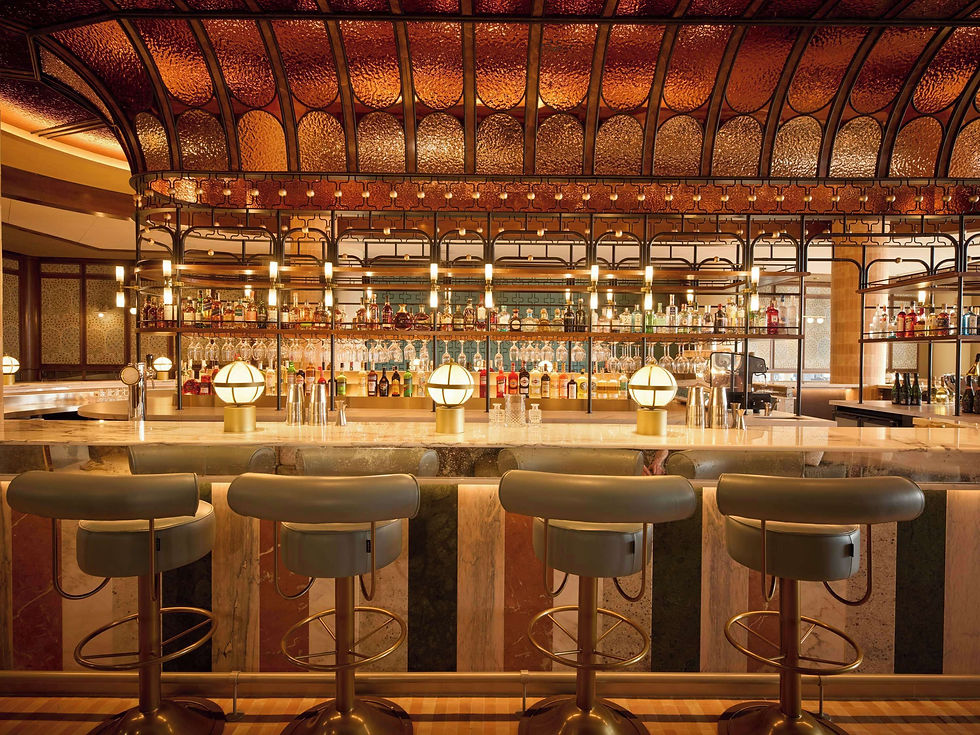
#9 Monument Hotel
There’s a certain electricity to Passeig de Gràcia, and Monument Hotel seems to bottle it. Set within the 19th-century Casa Enric Batlló, the property keeps its Modernista bones, arched windows, sculpted stone, and slender ironwork, then layers a contemporary gloss of smoked oak, bronze, and soft textiles. The tone is cosmopolitan without brashness: a foyer perfumed with fresh flowers, staff who welcome with easy poise, and sightlines that pull you toward the boulevard’s light.

Guest rooms feel meticulously composed rather than merely decorated. Expect handsome joinery, thick soundproofing, and beds that invite irresponsibly late starts. Bathrooms are generous and beautifully engineered, with stone underfoot, rain showers with proper pressure, freestanding or deep-soaking tubs, and mirrors that flatter rather than fib. Many rooms have balconies or Juliette balconies overlooking Passeig de Gràcia; others face capture balconies or Juliette railings over Passeig de Gràcia; others angle to quieter interior patios. Lighting is intuitive, wardrobe space ample, and the minibar is curated for grown-ups rather than snack emergencies.

Dining is where Monument flexes. The headline is Lasarte, a three-Michelin-star temple to precision and imagination, where courses arrive like small arguments for silence. Oria, its bright, Mediterranean-leaning sibling, does refined plates with a breezier tempo, ideal for a long lunch that accidentally reaches mid-afternoon. Between times, Hall0 pours serious cocktails in a velvet-toned lounge that feels equal parts salon and stage set; morning coffee or a nightcap both seem appropriate here.

Wellness hides in understated spaces. A small rooftop pool and sun deck offer a cool pause above the street’s glamour; the spa lowers the city’s volume with sauna, steam, treatment rooms, and a serene relaxation area. The fitness studio is compact but well specified, and a concierge team can route runners to leafy circuits through the Eixample or up toward Montjuïc.
The vibe lands at that sweet spot between design hotel and discreet urban grandee. You’ll notice fashion buyers and architects comparing notes over breakfast, weekenders plotting a Gaudí walk with pencilled maps, and couples drifting back late from a tasting menu, still a little dazzled. Service is sharp without fuss: restaurant bookings appear where there were none, museum slots are magicked at the right hour, and turn-down arrives as a quiet edit rather than a production.

Location is the trump card. Open the door and you’re on the city’s most glamorous promenade, a short stroll from Casa Batlló in one direction and La Pedrera in the other, with boutiques and galleries stitched between. The Gothic Quarter and El Born are a pleasant amble or a swift cab away; the beach sits at the end of a tram of sunlight if you’re feeling ambitious. Metro links are close, though Barcelona is best absorbed at walking speed, and the Monument makes an elegant base for doing exactly that.
Monument Hotel edits Barcelona’s abundance, architecture, appetite, and style into a stay that feels polished yet personal. It’s a city address with the soul of a collector: worldly, confident, and quietly thrilled to be in the middle of it all.

#10 Cotton House Hotel
Housed in the former headquarters of Barcelona’s 19th-century cotton guild, the mansion on Gran Via de les Corts Catalanes keeps its neoclassical dignity intact: marble floors, decorative mouldings, soaring ceilings, and the showpiece spiral staircase that floats from the mezzanine like a ribbon of stone. The entrance sequence sets the tone, lamplight on polished bannisters, a whisper of old industry repurposed into easy elegance.

Rooms take the legacy literally and lightly. Palettes lean toward ivory, slate, and midnight blue; textures celebrate the material that made the house famous, from woven headboards to crisp sheets. Expect smart, tailored joinery; blackout curtains that earn a late morning; and marble-tiled bathrooms with rain showers, proper pressure, and amenities that nod to botanical brightness. Several categories add balconies or Juliet railings to catch Eixample light; soundproofing is effective enough that the Gran Via becomes a moving postcard rather than a soundtrack.

Public spaces feel like chapters in a well-loved novel. The octagonal L’Ottava hall glows at golden hour; the library invites lingering with an espresso and a local magazine; and the former tailors’ rooms have been reborn as soulful salons. Outside, a leafy terrace slips between palms and jasmine for breakfast, vermouth, or a midnight sip. Up top, a petite rooftop pool and deck serve summer interludes with views that scan rooftops toward Tibidabo. There’s a compact fitness room to offset culinary ambitions and a concierge team that handles the city with light touch and excellent taste.
Dining orbits the hotel’s polished heartbeat, Batuar. The menu steers clear of Catalan clichés, gilded croquettes, market fish glossed with olive oil, and artichokes when in season, and breakfast is a quiet pleasure: pressed juices, flaky viennoiserie, eggs done exactly as intended. The bar is serious about classics; a martini arrives cold enough to reset your posture, while a sherry or vermouth spritz feels absolutely correct at dusk.

The vibe lands perfectly Barcelona. You’ll see fashion buyers comparing notes over cortados, architects sketching Gaudí fragments on napkins, couples plotting galleries and late dinners with insider intel from staff who know which tables are truly worth the detour. Service is warm, unruffled, and gently proud of place: reservations materialise, museum timings are optimised, and neighbourhood shortcuts are shared as if between friends.

Location is the ace up the sleeve. From Gran Via you’re a quick stroll to Passeig de Gràcia for Casa Batlló, La Pedrera, and the flagship boutiques; El Born and the Gothic Quarter lie just beyond, with wine bars, perfumeries, and galleries. The beach and Montjuïc are simple rides; the Universitat and Passeig de Gràcia metro stops keep everything efficient if your feet protest. Yet the hotel remains a refuge: step back through the door and the tempo softens to cool stone, soft lamps, and that warm welcome back.
Cotton House distils Barcelona’s dual nature: craft and modernity, commerce and seduction into a stay that feels both urbane and personal, like being welcomed into a beautifully kept private club whose members are your kind of people.
Also consider -
For a more independent stay
Casagrand Luxury Suites Barcelona:
On a leafy stretch of Avinguda Diagonal, away from the tourist crush yet firmly in the elegant heart of the Eixample, sits Casagrand Luxury Suites, a discreet retreat that redefines what it means to live, rather than simply stay, in Barcelona. There is no sweeping porte-cochère or dramatic lobby here. Instead, the entrance is understated, even residential, and that’s entirely the point: Casagrand is less hotel, more private townhouse, a collection of grand apartments that feel as if they’ve been designed with you in mind.
The building itself is a century-old modernist jewel, restored with reverence for its soaring ceilings, wrought-iron balconies, and patterned tilework. Inside, however, the aesthetic is resolutely contemporary: polished oak, clean lines, neutral palettes punctuated by bold artwork and plush textiles. The result is a perfect balance of Barcelona’s architectural heritage and cosmopolitan modernity.


Each of the 13 suites is vast, ranging from two to four bedrooms, making them ideal for families, groups of friends, or travellers who crave space. My suite felt more like an elegant apartment than a temporary stay: a sunlit living room opening onto a balcony that looked down onto Diagonal’s flow of traffic and trees; a dining table set as though ready for a dinner party; bedrooms lined in crisp white linens, layered with throws in rich textures. The kitchen, sleek and fully equipped, whispered promises of late-night tapas experiments with market-fresh produce from nearby Mercat de la Concepció.
The bathrooms, clad in marble, are indulgent sanctuaries. Oversized rainfall showers, deep tubs, and aromatic amenities turn the quotidian into the luxurious. It’s easy to forget you’re in a hotel at all, until you remember the small but significant gestures of hospitality that anchor the experience: daily housekeeping, turndown service, a stocked fridge upon request, and a team of concierges who operate more like hosts than staff.
Casagrand’s rooftop terrace is its hidden crown. From here, the city spreads out in every direction, a horizon of rooftops, spires, and the distant shimmer of the Mediterranean. There’s a plunge pool for hot afternoons, loungers for lazy mornings, and a shaded lounge area that begs for cava at sunset. Unlike the city’s larger hotels, the atmosphere is calm, private, a refuge from Barcelona’s intensity.


Wellness is woven subtly into the experience. A compact fitness studio is tucked away downstairs. Still, most guests will find their rhythm in the city itself: morning jogs along Diagonal, cycling to the seafront, or strolling Gaudí’s masterpieces just minutes away. Passeig de Gràcia, with its boutiques and architecture, is a short walk, while the Gothic Quarter is a leisurely fifteen-minute wander.
What sets Casagrand apart is its sense of belonging. Service is attentive yet low-key: recommendations for a neighbourhood bodega, reservations at an under-the-radar Michelin-starred table, a seamless airport transfer, all executed with warmth rather than ceremony. You don’t feel like a guest so much as a resident, temporarily woven into the city’s fabric.
To stay at Casagrand is to trade spectacle for intimacy, glitz for authenticity. It is Barcelona at its most livable: spacious, stylish, rooted in history, and elevated by modern design. For those who want the city
All hotels & resorts on The Five Star Edit are independently selected by our editors. However, we may receive a small commission from advertisers when using our affiliate links.
Best Hotels in Barcelona Article 2026


.png)